


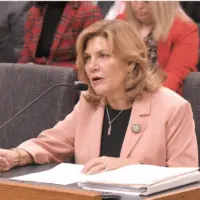
A Missouri House committee heard proposals Thursday to expand screenings for gifted education and add state funding for gifted students on a per-pupil basis
By: Annelise Hanshaw
Missouri Independent
More Missouri public school students could receive gifted education under two proposals debated by the House Education Committee Thursday.
State Rep. Brenda Shields, a Republican from St. Joseph, is sponsoring a bill that would require schools to screen all students to determine if they qualify as gifted before they reach third grade.
She estimates that there are 20,000 Missouri students that are gifted but not currently enrolled in specialized classes.
The bill expands on a state law that requires schools to offer gifted education when at least 3% of their student body is identified as gifted. This requirement began last school year.
“If screenings don’t happen, gifted and talented students aren’t identified,” she told the committee. “If the students are not identified, schools will never reach the 3% threshold to be able to offer a gifted program.”
Gifted students can present as squirrely or distracted in the classroom, Shields said, with thoughts and ideas beyond the basic curriculum. Providing a more enriching education will help both the students and their teacher, she said.
Beth Winton, chair of the Advisory Council on the Education of Gifted and Talented Children, agreed that many gifted students “are not always a pleasure to have in class.”
“The standard grade level curriculum is not designed to meet their academic or emotional needs,” she said. “And regular teachers already have enough demands on their time.”
Committee members largely spoke in favor of the bill, sharing personal anecdotes of their experiences in the classroom as teachers, parents and former students.
State Rep. Ann Kelley, a Republican from Lamar, said gifted education provides a needed challenge for some kids. Kelley, who taught eighth-grade English, said she saw students who were never identified as gifted but could benefit from the program.
“By (eighth grade), they don’t really test very many students at that point. And if they’ve been missed in that window, they’ve already checked out,” she said.
The largest concern came from state Rep. Mark Boyko, a Democrat from Kirkwood, who wondered if requiring schools to start screening by this fall is too tight of a timeline.
“As someone who has been on school boards, I know that drafting a good policy for a district is a process that takes a number of months,” he said. “So I have concerns that the bill starts one school year too early.”
Bolstering Shields’ legislation, a bill by state Rep. Scott Miller would ensure districts have the resources to educate gifted students by adding a line to the formula that determines state aid for public schools.
“High-quality gifted programming often includes advanced curriculum, specialized instructional strategies, social-emotional supports with trained educators and individualized learning pathways,” Miller, a St. Charles Republican, told the committee. “These services require additional staffing, materials and professional infrastructure, all of which come at a greater cost than general education alone.”
His bill would fund gifted students 60% higher than the base per-pupil amount. Based on the state’s current per-pupil funding, this means schools would receive an additional $4,287 per gifted student.
This number may decrease if the bill moves along in the legislative process. The committee’s chair, state Rep. Ed Lewis, a Moberly Republican, told Miller the multiplier was “pretty high.”
The bill’s fiscal note estimates it would have an annual cost of nearly $121.5 million, though Miller questioned the accuracy of the estimate.
Lobbyists for education groups such as the Missouri State Teachers Association and the Missouri Association of School Administrators spoke in favor of the funding boost.
“(The state) really does need to have a component in the formula to support gifted students,” said Otto Fajen, lobbyist for teachers union Missouri National Education Association. “That is critical.”
The committee did not take action on the bills Thursday.